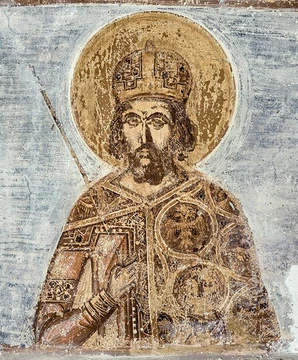
Constantine VII
Byzantine emperor and scholar who compiled key historical and agronomic works.

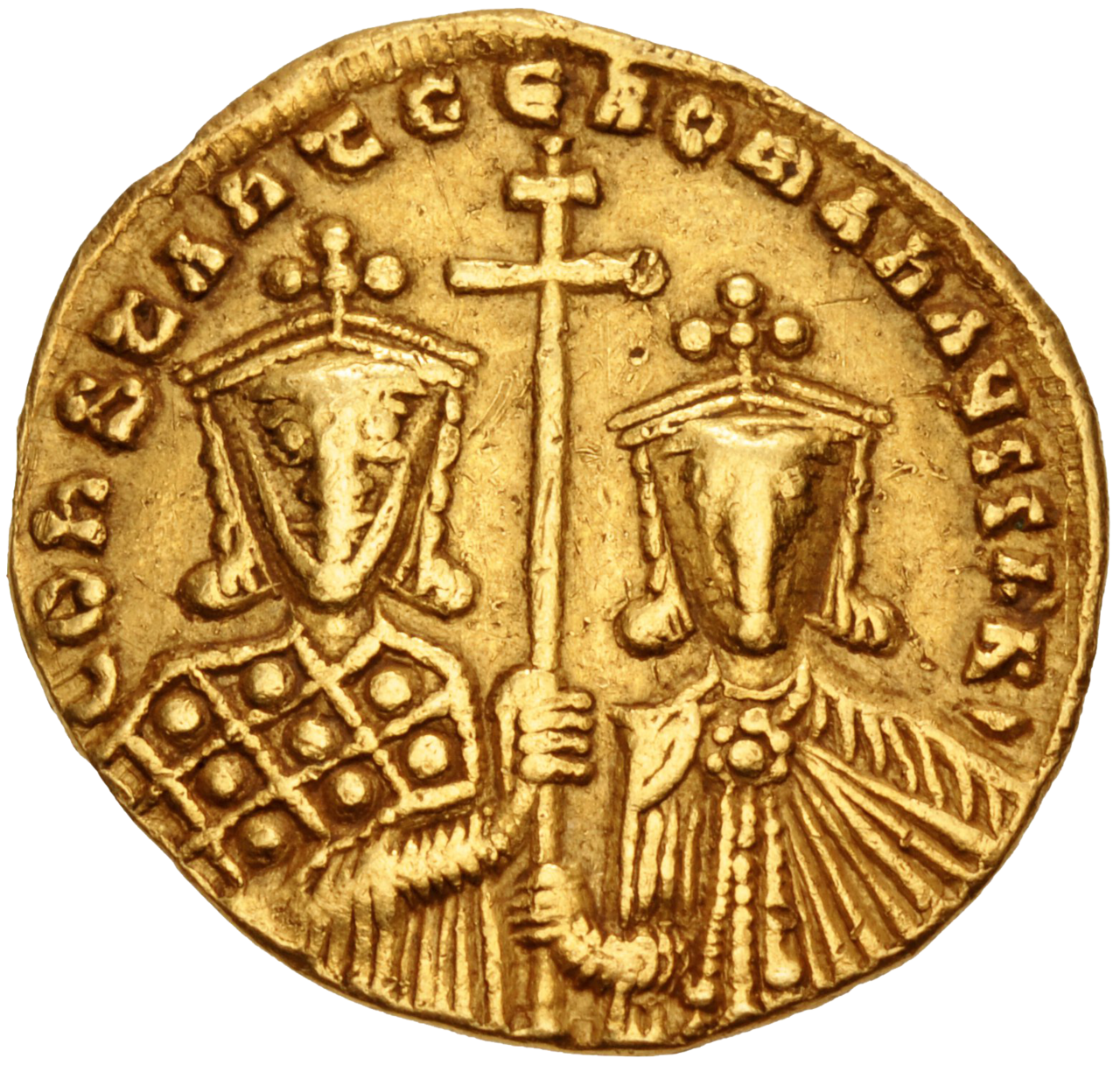
Classical Numismatic Group · CC BY-SA 2.5
Constantine VII Porphyrogenitus was the fourth Byzantine emperor of the Macedonian dynasty, reigning from 6 June 913 to 9 November 959. He is best known for his scholarly works, including the Geoponika, De Administrando Imperio, and De Ceremoniis, which provide valuable insights into Byzantine agriculture, administration, and court ceremony.
- born
- 17 May 905
- died
- 9 November 959
- field
- Emperor, scholar, writer
- nationality
- Byzantine
- known_for
- Geoponika, De Administrando Imperio, De Ceremoniis, De Thematibus, and possibly Vita Basilii
Lore & Background
Constantine's youth was marked by his relegation to the third level of succession and his focus on studying court ceremony. After Romanos was deposed in 944, Constantine became sole emperor on 27 January 945. He delegated authority to bureaucrats and generals, devoting himself to scholarly pursuits. He ordered restitution of peasant lands in 947, launched a failed fleet against Arab corsairs in Crete in 949, and achieved mixed success on the eastern frontier. He maintained diplomatic relations with the caliph of Cordoba, Otto I, and received Olga of Kiev in 957. He died on 9 November 959, possibly poisoned by his son or daughter-in-law.
Reader's Guide
Constantine VII's significance lies primarily in his literary and scholarly contributions, which preserved and organized knowledge from earlier Greek and Roman sources. His works, such as De Administrando Imperio and De Ceremoniis, offer modern historians detailed accounts of Byzantine diplomacy, administration, and court life. The Geoponika compiled agronomic knowledge otherwise lost. His reign also saw efforts to stabilize the peasant landholding system, which underpinned the empire's economy and military. Though his military campaigns were mixed, his diplomatic outreach, including the visit of Olga of Kiev, helped spread Byzantine influence. His legacy as a scholar-emperor endures through the texts he commissioned or wrote, which remain key sources for understanding the Byzantine world.
Did You Know?
- Constantine VII was born in the Purple Chamber of the imperial palace, which gave him the epithet Porphyrogenitus, even though his mother was not married to Leo VI at the time.
- He was under the regency of his mother Zoe from 913 to 919, then shared the throne with Romanos Lekapenos from 920 to 945.
- His work De Administrando Imperio was addressed to his son Romanos and contains advice on running the empire and dealing with external enemies.
- In 957, he was visited by Olga of Kiev, who was baptized as a Christian with the name Helena.
The Purple Chamber and the Question of Legitimacy
Constantine VII entered the world on 17 May 905 in Constantinople, the product of Leo VI's controversial fourth marriage to Zoe Karbonopsina. Because that union was considered uncanonical, his mother took the extraordinary step of delivering him inside the Purple Chamber of the imperial palace—a room lined with porphyry stone where, by tradition, the legitimate offspring of sitting emperors were brought into the world. This act earned him the epithet porphyrogenitus, a title that would define his political identity for the rest of his life. The distinction mattered enormously in the Eastern Roman succession system: a son born in the purple held precedence over elder brothers who had not enjoyed that privilege. Throughout his reign, Constantine leaned on this claim to assert his right to the throne against every rival who challenged him, from the usurper Constantine Doukas to the Lekapenos family who would eventually dominate his early years. The Purple Room thus became not merely a birthplace but a political instrument, a symbol he wielded to anchor his legitimacy in an era of contested authority.
A Childhood in the Shadow
Constantine was elevated to the throne at just two years old on Whitsunday, 15 May 908, but he would never truly hold power in his youth. After his father Leo VI died and his uncle Alexander followed shortly after in June 913, a seven-man regency council was appointed, quickly dominated by Patriarch Nicholas Mystikos. When Nicholas made the unpopular decision to recognize Tsar Simeon of Bulgaria as emperor, Zoe Karbonopsina seized the regency and replaced him. Her tenure proved equally fragile; the Bulgarians crushed her chief military ally, General Leo Phokas, in 917. By March 919, Admiral Romanos Lekapenos had taken over, and through a calculated series of promotions—basileopatōr, then kaisar, then co-emperor by December 920—he had effectively dethroned the young boy he had married his daughter Helena to. Constantine, described as taciturn and unattractive, was pushed to third place in the line of succession behind Romanos's eldest son Christopher. Yet those years of marginalization were not wasted: the intelligent young man immersed himself in the study of court ceremony and the broader intellectual life of the palace, laying the groundwork for the literary figure he would later become.
The Emperor as Scholar
Once Constantine VII finally emerged as sole emperor in January 945, he showed little appetite for the day-to-day exercise of executive power. Instead, he channeled his considerable intellect into a remarkable body of written work that would shape Byzantine administrative and cultural memory. The most celebrated of these is De Administrando Imperio, a strategic and diplomatic manual addressed to his own son Romanos, offering counsel on the empire's foreign neighbors and internal governance. De Ceremoniis provided a detailed account of the rituals and protocols of the imperial court, while De Thematibus catalogued the provincial military districts of the eastern and western frontiers. His reign also saw the compilation of the Geoponika, a significant agronomic treatise drawing on earlier agricultural knowledge. Additionally, a work titled Vita Basilii, a biographical account of the earlier emperor Basil, is sometimes attributed to him, though scholars remain uncertain about his direct authorship. These texts reveal a mind that valued systematic knowledge, ceremonial precision, and the long memory of the state, and they remain indispensable sources for understanding the Byzantine world.
Governance, Diplomacy, and a Mysterious End
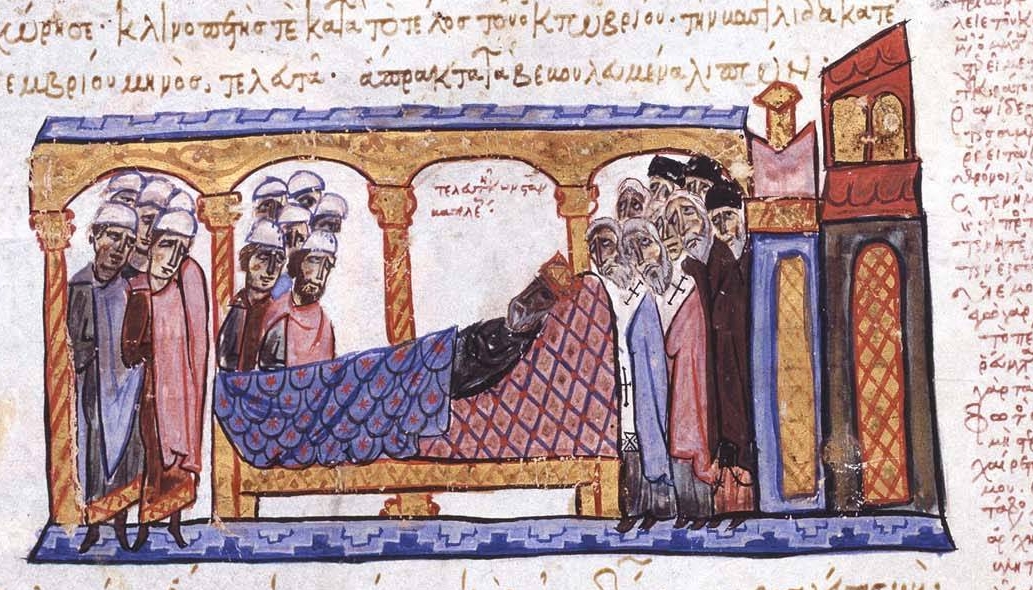
As sole ruler, Constantine VII pursued a pragmatic blend of domestic reform, military effort, and high diplomacy. In 947 he issued a sweeping decree ordering the immediate return of all peasant lands absorbed by the aristocracy, without compensation—a measure that by the end of his reign had improved the condition of the rural smallholders who formed the backbone of the empire's economic and military strength. On the military front, results were mixed: a 100-ship fleet launched against Arab corsairs in Crete in 949 failed, while the eastern frontier saw alternating gains and losses before Nikephoros Phokas and John Tzimiskes recovered key territories in 958 and 959. Diplomatically, Constantine maintained active ties with the court of Abd ar-Rahman III in Cordoba and with Otto I of the Holy Roman Empire. His most famous encounter came in autumn 957, when Olga of Kiev arrived in Constantinople, was baptized as Helena, and—according to legend—outwitted the emperor's romantic interest by making him her godfather. Constantine died in Constantinople on 9 November 959, succeeded by his son Romanos II, though persistent rumors alleged that the young emperor or his wife Theophano had poisoned him.
Gallery
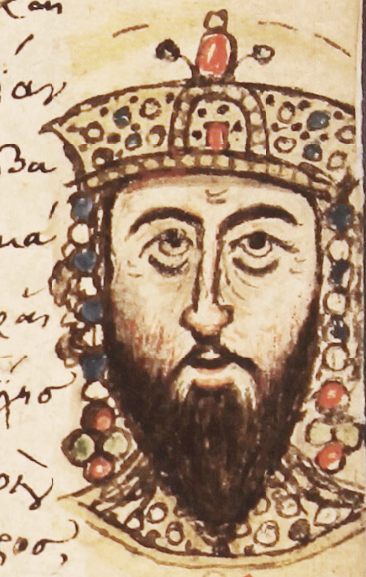
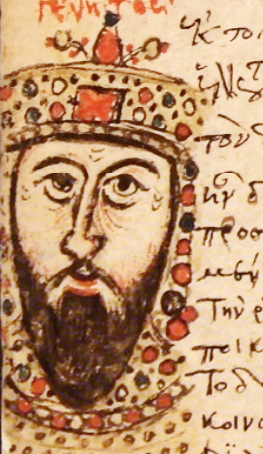
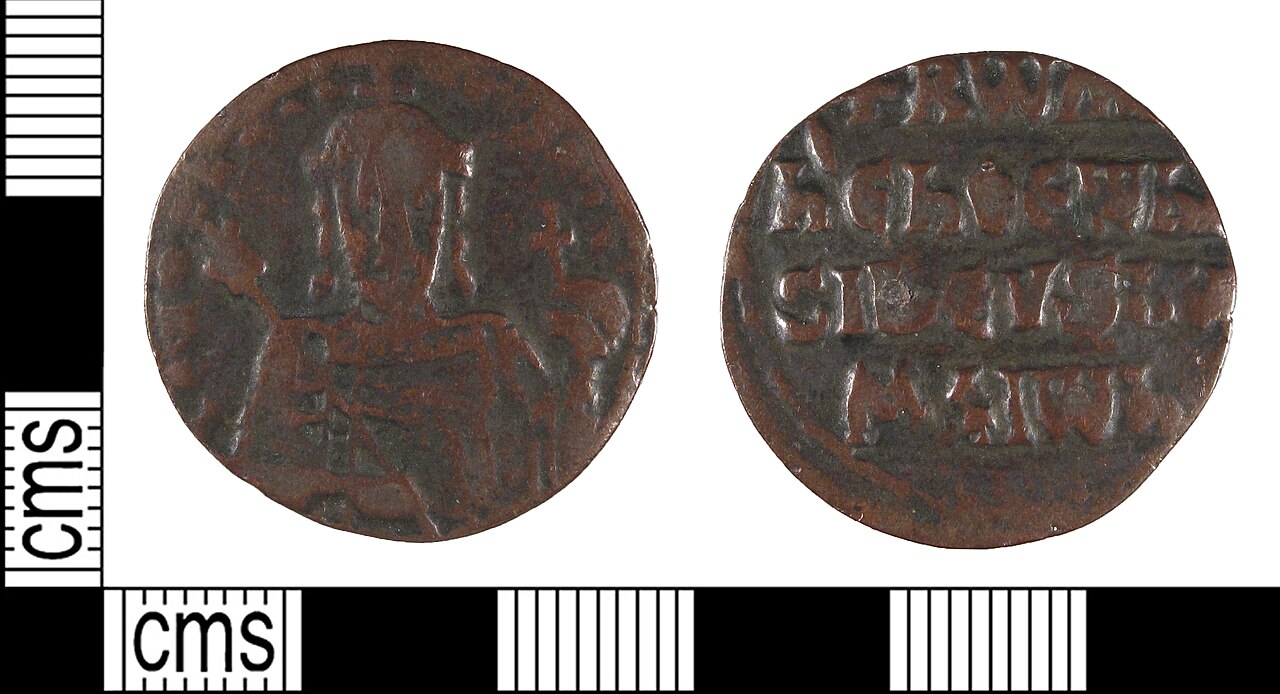
More in Emperors Of The Byzantine And Roman World 1-24
Spotted an error? Know more?
This is a living reference — every entry is fact-audited, and reader corrections feed straight into our audit queue. Suggest an edit · See this site's audit record