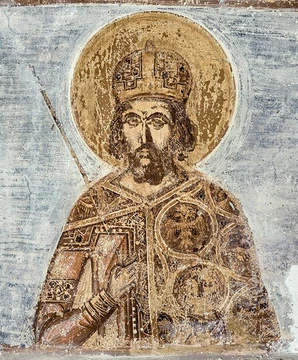
Constans II
Byzantine emperor who visited Rome and faced Arab invasions.

Constans II (7 November 630 – 15 July 668), also called 'the Bearded,' was Byzantine emperor from 641 to 668. He was the last attested emperor to serve as consul, in 642, and the first emperor to visit Rome since the fall of the Western Roman Empire in 476. His reign was marked by Arab invasions, religious disputes between Orthodox and Monothelites, and his attempt to steer a middle course with the Typos of Constans in 648.
- born
- 7 November 630, Constantinople
- died
- 15 July 668, assassinated in his bath
- field
- Byzantine emperor
- nationality
- Byzantine (Roman)
- known_for
- Last emperor to serve as consul; first emperor to visit Rome since 476; Typos of Constans; Battle of the Masts
Lore & Background
Constans II was born on 7 November 630 in Constantinople to Gregoria and Constantine III, a son of Emperor Heraclius. After Heraclius died in February 641, Constantine III and Heraclonas succeeded him. Constantine III died after three months, and in September 641 the 10-year-old Constans was crowned co-emperor due to rumors that Heraclonas and Martina poisoned his father. Later in 641, Heraclonas was deposed by the general Valentinus, and Constans became sole emperor, reigning under a regency of senators led by Patriarch Paul II of Constantinople. In 644, Valentinus attempted to seize power but failed.
Under Constans, the Byzantines withdrew from Egypt in 642. Arab attacks intensified under caliphs Umar, Uthman, and Mu'awiya I. In 655, Constans led a fleet against the Muslims at the Battle of the Masts off Lycia, where 500 Byzantine ships were destroyed and the emperor barely escaped by trading clothes with a soldier. In 658, he defeated Slavs in the Balkans and resettled some in Anatolia. In 659, he campaigned east and made peace with the Arabs. He ordered the arrest of Pope Martin I in 653 after the pope condemned Monothelitism and the Typos. Constans had his brother Theodosius killed in 660, fearing a usurpation.
In 663, Constans visited Rome for twelve days, stripping buildings including the Pantheon of ornaments and bronze. He later moved to Syracuse in Sicily, where he was assassinated on 15 July 668 by his chamberlain, either killed with a bucket or stabbed with a knife. His son Constantine IV succeeded him.
Reader's Guide
Constans II reigned during a period of intense Arab expansion, losing Egypt and facing raids across Anatolia, the Mediterranean, and the Aegean. His defeat at the Battle of the Masts in 655 was a severe naval loss, though the First Fitna in the Caliphate prevented an attack on Constantinople. His religious policy, the Typos of Constans (648), attempted to suppress debate on the natures of Christ, but satisfied neither Orthodox nor Monothelites and led to conflict with Pope Martin I. His visit to Rome in 663 was a symbolic reassertion of imperial presence in the West, but his stripping of Roman monuments alienated Italian subjects. His reign saw the creation of the first themes according to some scholars, though this is disputed. His assassination in 668 ended a reign marked by military setbacks, internal religious strife, and administrative changes.
Did You Know?
- Constans II was the last attested Byzantine emperor to serve as consul, in 642.
- He was the first emperor to visit Rome since the fall of the Western Roman Empire in 476.
- At the Battle of the Masts in 655, 500 Byzantine ships were destroyed and Constans escaped by trading clothes with a soldier.
- He ordered the arrest of Pope Martin I in 653 after the pope condemned Monothelitism and the Typos.
Frequently Asked Questions
Who is Constans II?
Constans II, nicknamed 'the Bearded,' was a Byzantine emperor who ruled from 641 until his assassination in 668. He was the son of Heraclius and one of the last emperors to hold the ancient title of consul.
What is Constans II most famous for?
He holds two notable records: he was the final emperor to serve as consul (in 642) and the first to set foot in Rome since the Western Empire's collapse in 476. He is also remembered for the Battle of the Masts and his religious compromise known as the Typos.
How did Constans II die?
In July 668, Constans II was murdered by his own son in his bathing chamber at Syracuse, Sicily. The assassination ended his reign and marked a violent turn in the Heraclian dynasty's succession.
What was the Typos of Constans?
Issued in 648, the Typos was a decree meant to end the theological quarrel between Orthodox and Monothelite factions by forbidding further debate over the nature of Christ's will. It attempted a middle path but ultimately failed to satisfy either side.
Why is Constans II historically significant?
His reign bridged the late Heraclian period and the rise of the Isaurian dynasty, and his policies shaped Byzantine religious and military strategy during a critical era of Arab expansion. His visit to Rome also symbolized the continued, if diminished, connection between Constantinople and the old capital.
More in Emperors Of The Byzantine And Roman World 1-24
Spotted an error? Know more?
This is a living reference — every entry is fact-audited, and reader corrections feed straight into our audit queue. Suggest an edit · See this site's audit record