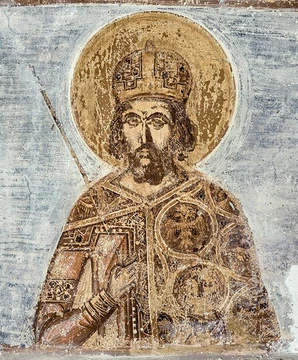
Constantine IX Monomachos
Byzantine emperor whose reign saw the Great Schism and fiscal decline.

Wikimedia Commons · Public domain
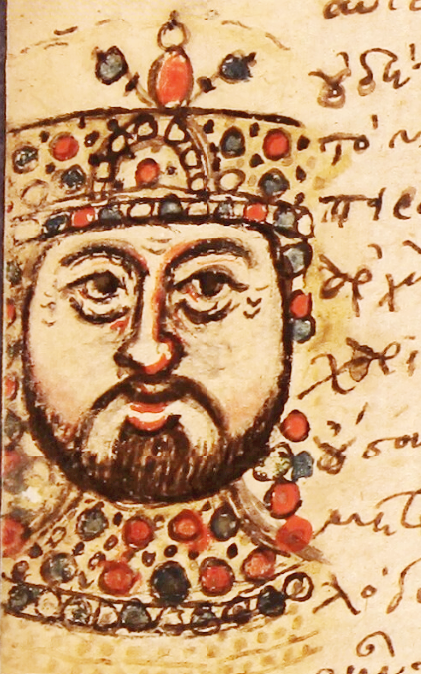
Constantine IX Monomachos (c. 980/c. 1000 – 11 January 1055) reigned as Byzantine emperor from June 1042 to January 1055. A member of the urban aristocracy, he became emperor through marriage to the ruling empress Zoë Porphyrogenita in 1042, sharing the throne with her sister Theodora. His energetic rule was one of the most consequential in the Byzantine Empire's tumultuous 11th century, marked by fiscal profligacy, administrative reforms, and the decisive events of the Great Schism.
- born
- c. 980 or c. 1000 in Antioch
- died
- 11 January 1055
- field
- Byzantine emperor
- nationality
- Byzantine
- known_for
- Reign during the Great Schism, debasement of gold coinage, and attempted administrative reforms
Lore & Background
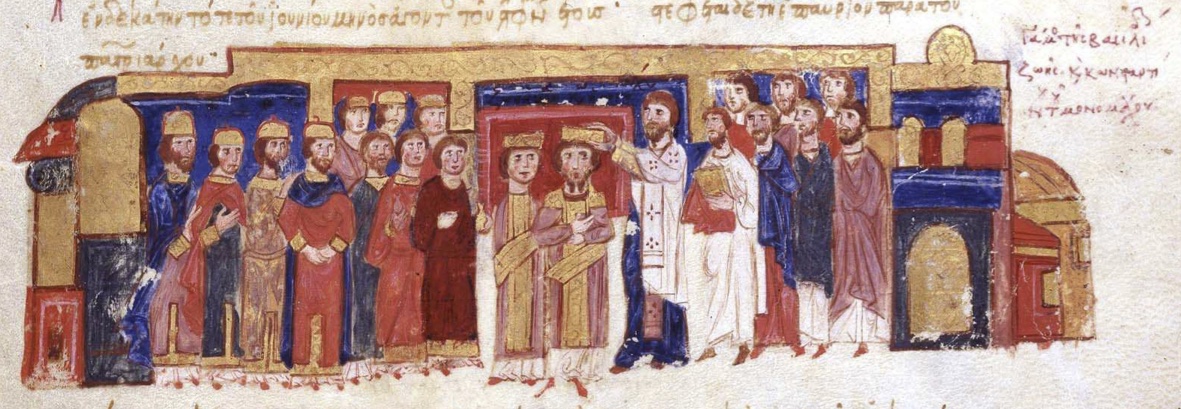
Constantine Monomachos was the son of Theodosios Monomachos, an important bureaucrat under Basil II and Constantine VIII. His career suffered after his father was suspected of conspiracy, but improved through marriage to a niece of Emperor Romanos III Argyros. He caught the eye of Empress Zoë Porphyrogenita and was exiled to Mytilene by her second husband, Michael IV. After the overthrow of Michael V in 1042, Constantine was recalled, appointed a judge in Greece, then summoned to Constantinople. He married Zoë on 11 June 1042 and was crowned the next day.
Constantine was described by Michael Psellos as a marvel of beauty, with ruddy hair and a symmetrical body. His personality was good-natured and generous, but he was prone to violent outbursts on suspicion of conspiracy. He spent lavishly on gifts and religious projects, debased the gold currency for the first time since Constantine the Great, and expanded the aristocracy. He created the office of the Epi ton kriseon and attempted to reform the legal system with a law school, with limited success.
Constantine was victorious in two civil wars, foiled several coup attempts, and fought off a Kievan Rus' raid. He annexed the Armenian kingdom of Ani in 1045 but persecuted the Armenian Church. He was humiliated by the Pechenegs and failed to stop the Seljuq Turks. In 1054 he oversaw the Great Schism, and his treatment of papal legates exacerbated tensions. He died of an infection related to chronic arthritis.
Reader's Guide
Constantine IX Monomachos has traditionally been viewed as an incapable, militarily inept emperor and one of the architects of Byzantine decline in the late 11th and 12th centuries. However, recent scholarship has rehabilitated his reputation as a civil administrator and reformer. He was perhaps the only emperor between Basil II and the Battle of Manzikert to attempt a coherent program of reform, even if flawed and unsuccessfully carried out. His reign saw the first permanent debasement of gold coinage since Constantine the Great, massive expansion of the aristocracy, and the decisive events of the Great Schism in 1054. Though the empire largely retained its borders, Constantine is often blamed for the poor state of the army leading up to Manzikert. He may be considered the last effective emperor of the Macedonian Renaissance.
Did You Know?
- Constantine was the first Byzantine emperor to permanently debase the gold coinage since Constantine the Great introduced it.
- He married Empress Zoë Porphyrogenita on 11 June 1042, without the participation of Patriarch Alexius, who refused to officiate a third marriage.
- His family name Monomachos ('one who fights alone') was inherited by his grandson Vladimir II Monomakh of Kiev.
- He died of an infection related to his chronic arthritis on 11 January 1055.
From Exile to the Purple
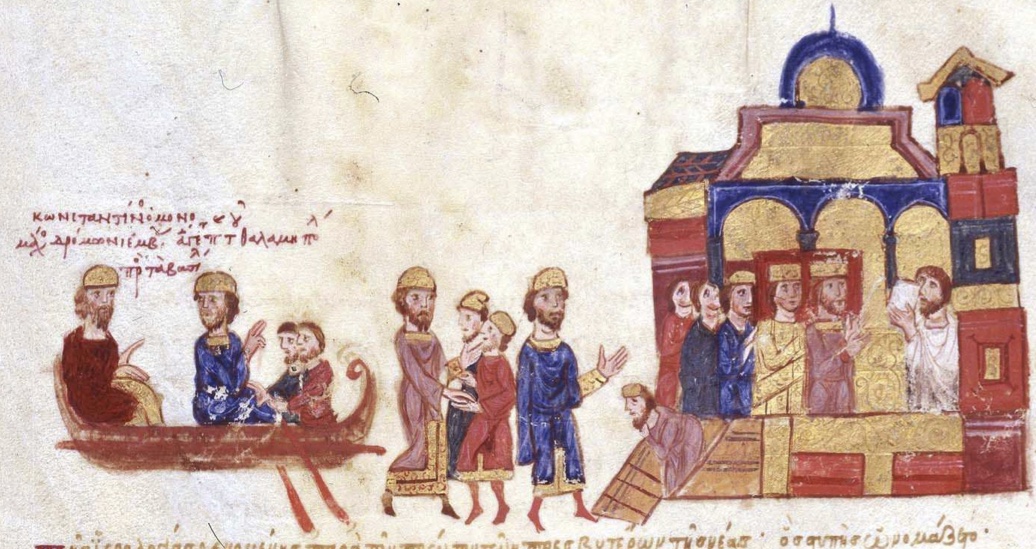
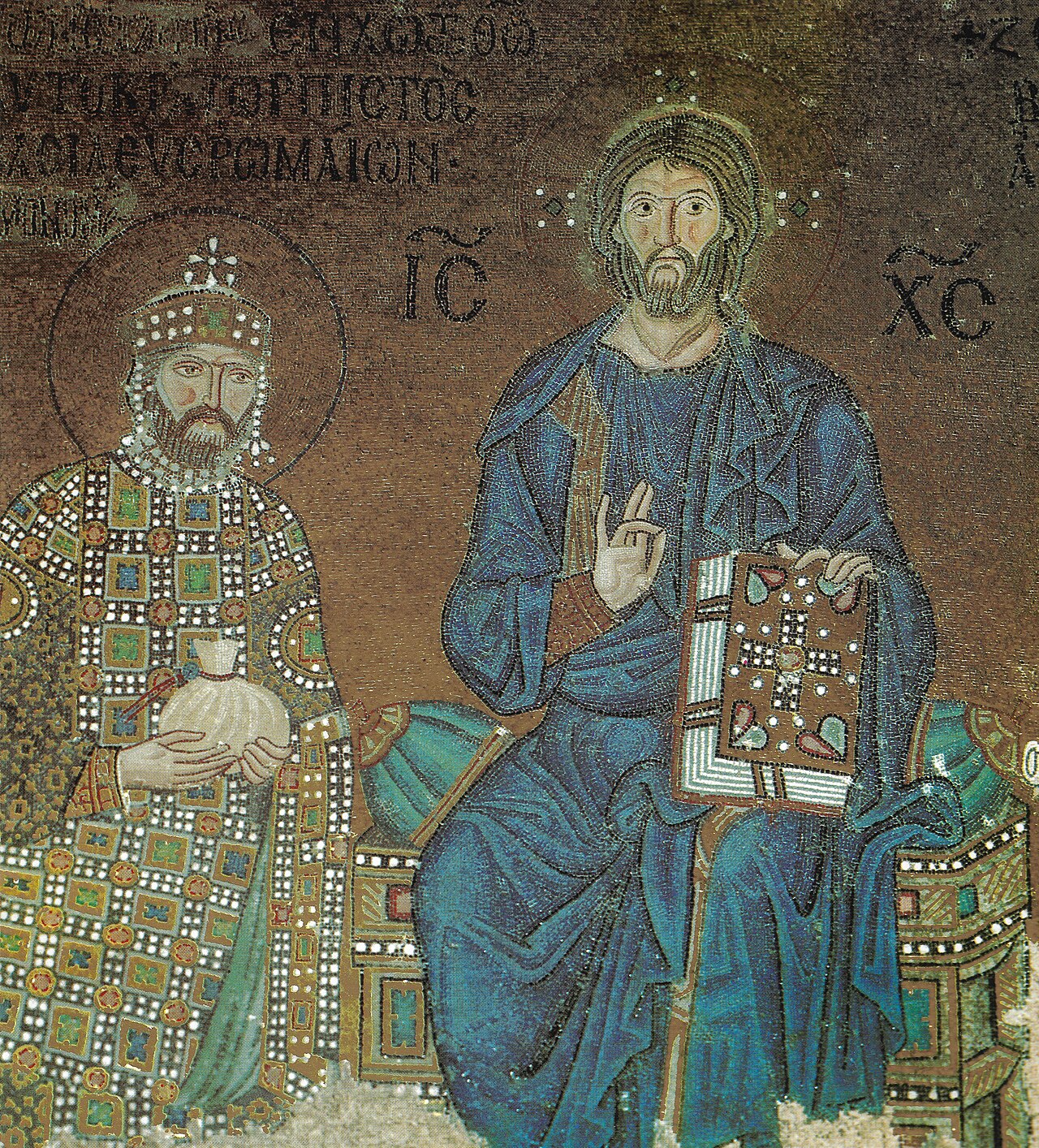
Constantine Monomachos, born around 980 or 1000 in Antioch, was the son of Theodosios Monomachos, a senior bureaucrat who served under both Basil II and Constantine VIII. His early career was shadowed by the suspicion that his father had been involved in a conspiracy, a stigma that limited his prospects for years. His fortunes shifted when he married a daughter of Basil Skleros, making him nephew-in-law to Emperor Romanos III Argyros. Yet even this connection could not save him from exile to Mytilene on Lesbos, ordered by Michael IV, who had noticed the handsome, urbane Constantine catching Empress Zoë's attention. The political chaos of 1042—Michael IV's death followed by the overthrow of Michael V—brought Constantine back from exile. Before he could even begin his appointment as a judge in Greece, he was summoned to Constantinople, where the co-empresses Zoë and Theodora were on the verge of open conflict. After two candidates for Zoë's hand failed (one showing contempt, the other dying under suspicious circumstances), the empress turned to Constantine. They wed on 11 June 1042 in a ceremony Patriarch Alexius refused to bless, and he was crowned the following day.
Treasury, Titles, and the Architecture of Reform
Constantine inherited one of the most substantial imperial treasuries the Byzantine state had ever accumulated, a legacy of Basil II's long reign, yet his rule was defined by a spending habit that drained those reserves. He lavished money on personal gifts, religious endowments of extraordinary scale, and the elevation of the aristocracy to unprecedented numbers. Most consequentially, for reasons historians still debate, he permanently debased the gold coinage—the first such debasement since Constantine the Great had introduced it. In provincial governance, he navigated the long-running tension between the urban elite and the great landholding families known as the Dynatoi by extending tax exemptions to the latter through what amounted to an early pronoia arrangement, while showering the civil aristocracy with titles, privileges, and cash. He also responded to the growing authority of civil judges over theme commanders by establishing the office of Epi ton kriseon. His broader legal reform, envisioned as a law school under a nomophylax, achieved only partial success.
War, Humiliation, and the Road to Manzikert
Constantine's military record was a mixture of genuine achievement and costly failure. He won two civil wars, repelled multiple coup attempts, and successfully defended against a Kievan Rus' incursion. Yet in the West he suffered a humiliating defeat at the hands of the Pechenegs, and in the East he proved unable to check the advancing Seljuq Turks. Despite these setbacks, the empire largely held the frontiers that Basil II's conquests had established, and Constantine even expanded territory eastward by annexing the Armenian kingdom of Ani. It is nonetheless the condition of the army in the years preceding the catastrophic Battle of Manzikert that has most damaged his military reputation. His reign also witnessed the decisive rupture of 1054: his handling of the papal legates sent by Leo IX inflamed the already tense relationship between those legates and Patriarch Michael I Cerularius, crystallizing what would become the Great Schism between the Catholic and Eastern Orthodox Churches.
The Last Emperor of the Macedonian Renaissance
For centuries, the standard verdict on Constantine Monomachos was unflattering: an inept, pleasure-seeking ruler whose profligacy and military failures set the stage for the Byzantine collapse of the late eleventh and twelfth centuries. He was cast as one of the architects of that long decline. Yet a wave of recent scholarship has substantially rehabilitated his image, emphasizing his work as a civil administrator and institutional reformer. Between Basil II's death and the disaster at Manzikert, Constantine may have been the only emperor to attempt a coherent, programmatic set of reforms—spanning fiscal policy, provincial administration, and the legal system—even if those reforms were flawed and ultimately unsuccessful. His death on 11 January 1055, caused by an infection stemming from chronic arthritis, ended a reign that, in the reassessment of modern historians, marks the last effective expression of the Macedonian Renaissance before the empire's long unraveling.
Gallery
Frequently Asked Questions
Who is Constantine IX Monomachos?
He was a Byzantine emperor who held the throne from June 1042 until his death in January 1055. A member of Constantinople's urban aristocracy, he rose to power through his marriage to the ruling empress Zoë Porphyrogenita rather than through a military coup or dynastic inheritance.
How did Constantine IX Monomachos become emperor?
In 1042 he married the reigning empress Zoë and was elevated to co-emperor alongside her and her sister Theodora. This made him one of the rare Byzantine rulers whose path to the purple was a political marriage rather than army acclamation or bloodline succession.
What role did Constantine IX Monomachos play in the Great Schism?
His thirteen-year reign was the window in which the formal rupture between the Eastern and Western Churches became irreversible, culminating in the 1054 mutual excommunications. As the sitting emperor, he presided over the political and ecclesiastical tensions that hardened into the permanent split now known as the Great Schism.
Why is Constantine IX Monomachos's fiscal policy so controversial?
To cover court expenses and military costs, he sharply reduced the gold content of the nomisma, a coin that had symbolized Byzantine monetary credibility for centuries. Historians widely regard this debasement as a pivotal blow to the empire's long-term economic standing.
How did Constantine IX Monomachos's reign end, and why does he matter?
He died on 11 January 1055, leaving an empire that had ceded key Balkan and Anatolian territories and whose coinage had been seriously weakened. Despite those setbacks, the sheer scope of events under his energetic rule—from administrative reform to the Schism—makes him one of the most consequential figures of the eleventh-century Byzantine world.
More in Emperors Of The Byzantine And Roman World 1-24
Spotted an error? Know more?
This is a living reference — every entry is fact-audited, and reader corrections feed straight into our audit queue. Suggest an edit · See this site's audit record