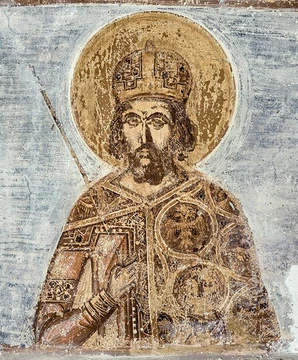
Anastasius I Dicorus
Eastern Roman emperor who reformed finances and built lasting defenses.

Miguel Hermoso Cuesta · CC BY-SA 4.0
Anastasius I Dicorus, born around 430 and dying on 9 July 518, ruled as Eastern Roman emperor from 491 until his death. He was a lifelong civil servant who ascended to power at age 61 after being selected by Ariadne, the widow of the previous emperor, Zeno. His time in office focused on overhauling the empire’s administration, finances, economy, and bureaucracy. These changes created a stable government, revived the monetary system, and built a large budget surplus, which later enabled more ambitious projects under successors like Justinian I. Many of Anastasius’ reforms were so durable that their impact lasted for centuries. A Monophysite Christian, his personal religious views stirred conflict throughout his reign in an empire increasingly split along doctrinal lines. He was not, however, the final non-Chalcedonian ruler of the Byzantine Empire—later emperors such as Philippicus Bardanes (711–713) also held non-Chalcedonian views.
Anastasius was born in Dyrrachium, likely no later than 431, into an Illyro-Roman family. He had one black eye and one blue eye—a condition called heterochromia—which earned him the nickname Dicorus, meaning “two-pupiled.” Before becoming emperor, he worked as a silentiary. His brother Paulus served as consul in 496. Paulus and a woman named Magna had a daughter, Irene, who married Olybrius. Olybrius was the son of Anicia Juliana and Areobindus Dagalaifus Areobindus. Their daughter Proba married Probus and gave birth to a younger Juliana. This Juliana married a possible relative, another Anastasius (son of Anastasius and maternal grandson of Theodora), and had children: Areobindus, Placidia, and a younger Proba. That younger Proba married Flavius Anastasius (born 530) and mothered Areobindus (born 550) and Placidia (born 552), who wed John Mystacon. Another nephew, Probus, was consul in 502. Anastasius’ sister Caesaria married Secundinus and had sons Hypatius and Pompeius. A great-nephew, Anastasius Paulus Probus Moschianus Probus Magnus, served as consul in 518. His daughter Juliana later married Marcellus, a brother of Justin II. This extensive family likely included several viable candidates for the throne.
After Zeno’s death in 491, crowds in Constantinople’s Hippodrome demanded a Chalcedonian and Roman successor, chanting for an Orthodox emperor. Under this pressure, Ariadne chose Anastasius over Zeno’s brother Longinus, a
- born
- c. 430, Dyrrachium
- died
- 9 July 518
- field
- Eastern Roman Emperor
- nationality
- Illyro-Roman
- known_for
- Administrative and fiscal reforms, building the Anastasian Wall and fortress of Daras; the Acacian schism was ended under his successor Justin I in 519
Lore & Background
Anastasius was born at Dyrrachium into an Illyro-Roman family. He had one black eye and one blue eye (heterochromia), earning the nickname Dicorus ('two-pupiled'). Before becoming emperor, he was a silentiary. He came to power after Zeno's death when Ariadne chose him over Zeno's brother Longinus, upsetting the Isaurians. He married Ariadne on 20 May 491, shortly after his accession on 11 April. He gained popular favour by remitting taxes, especially abolishing the hated tax on receipts paid mostly by the poor. Not long after his accession, circus factions caused riots and set fires around the Hippodrome; the riot was pacified when he replaced the city prefect Julian with his brother-in-law Secundinus.
Reader's Guide
Anastasius I Dicorus is significant for his comprehensive reforms that stabilized the Eastern Roman Empire's finances and administration after a period of decline. By shifting tax and payment methods from goods to hard currency, he reduced embezzlement and improved accounting, leading to a budget surplus of 320,000 lb of gold by his reign's end. His military policies included the Isaurian War (492–497), which suppressed a revolt and relocated Isaurians to Thrace, and the Anastasian War (502–505) against Sassanid Persia, after which he built the fortress of Daras. He also constructed the Anastasian Wall to protect Constantinople from Bulgar invasions and fortified his birthplace, Dyrrachium. His religious sympathies as a Monophysite caused tensions, including the deposition of the Metropolitan of Chalcedon in 512 and the rebellion of Vitalian in 513. Despite these conflicts, his reforms endured for centuries and enabled the ambitious policies of his successors, particularly Justinian I.
Did You Know?
- Anastasius was nicknamed Dicorus because he had one black eye and one blue eye (heterochromia).
- He abolished the hated tax on receipts, which was mostly paid by the poor.
- He built the Anastasian Wall, extending from the Propontis to the Black Sea, to protect Constantinople.
- By the end of his reign, the treasury had a gold reserve of 320,000 lb.
An Unlikely Ascension
Anastasius was not born to power. A career civil servant and silentiary from Dyrrachium, he was in his sixties when the political chaos following Zeno's death in 491 thrust him into the imperial spotlight. The crowds in Constantinople's Hippodrome demanded a Chalcedonian, properly Roman successor, chanting for an Orthodox emperor. Under that pressure, Zeno's widow Ariadne selected Anastasius over Zeno's own brother Longinus, a choice that inflamed the Isaurian faction. The patriarch of Constantinople extracted a pledge that Anastasius would not repudiate the Council of Chalcedon before he could take the throne. Once installed, he moved swiftly to consolidate his position, exiling Longinus and purging Isaurian officials. He won popular support by abolishing the deeply resented tax on receipts, a levy that fell hardest on the poor. Ariadne married him in May 491, cementing the alliance. When circus factions rioted and set fires around the Hippodrome, he quelled the unrest by replacing the city prefect Julian with his brother-in-law Secundinus, demonstrating the political acumen that would define his twenty-seven-year reign.
The Bureaucrat Who Built an Empire's Future
Anastasius' greatest contribution was not military but administrative. As a man who had spent his life navigating the machinery of government, he brought a bureaucrat's precision to the imperial treasury and civil service. His reforms targeted the tax base, streamlined the economy, and restored fiscal health to an empire that had been mired in financial depression and low morale. The results were staggering: by the end of his reign, the imperial treasury reportedly held a reserve of 320,000 pounds of gold. This was not merely a number; it was the foundation upon which his successors, especially Justinian I, could build their ambitious programs of legislation, construction, and military expansion. Because many of Anastasius' institutional reforms proved durable, their influence rippled through Byzantine governance for centuries. His reign demonstrated that a stable, reinvigorated monetary economy and a sizeable budget surplus could transform the empire's capacity to act, turning a financially strained state into one capable of sustained, ambitious policy.
Fortresses, Frontiers, and the Price of Peace
Anastasius' reign was marked by two significant military conflicts that reshaped the empire's borders. The Isaurian War (492–497) erupted when Longinus's supporters, along with local discontents, revolted in the Isaurian highlands. The decisive Battle of Cotyaeum in 492, won by John the Scythian and John the Hunchback, broke the main force of the rebellion, but guerrilla resistance in the mountain strongholds persisted for five years. The final suppression saw thousands of Isaurians forcibly relocated to Thrace. The Anastasian War against Sassanid Persia (502–505) saw the loss of Theodosiopolis and Amida, the latter recovered in exchange for gold. Peace came in 506, after which Anastasius constructed the formidable fortress of Daras, renamed Anastasiopolis, to counter the Persians at Nisibis. The military commitments drained troops from the Balkans, leaving those provinces vulnerable to Bulgar invasions. In response, he built the Anastasian Wall stretching from the Propontis to the Black Sea and transformed his birthplace Dyrrachium into one of the Adriatic's most heavily fortified cities with Durrës Castle.
Faith, Family, and the Fractures of a Divided Empire
Anastasius' personal religious convictions as a Monophysite Christian cast a long shadow over his reign. In an empire increasingly split along theological lines, his sympathies generated persistent tension, and the condition extracted by the patriarch of Constantinople—that he not repudiate the Council of Chalcedon—highlighted the delicate balance he had to maintain. He would remain the last non-Chalcedonian to hold the Byzantine throne. Beyond theology, Anastasius' family network was remarkably extensive and politically significant. His brother Paulus served as consul in 496, and their descendants intermarried across generations, producing figures like Proba, Juliana, and multiple Areobinduses. His sister Caesaria's children Hypatius and Pompeius, along with great-nephews such as the consul of 518, created a web of relatives who may well have represented viable candidates for the throne. This sprawling Illyro-Roman family, rooted in Dyrrachium, wove itself deeply into the political fabric of the late fifth and early sixth centuries, ensuring that Anastasius' bloodline remained a force in Byzantine affairs long after his death in 518.
Gallery
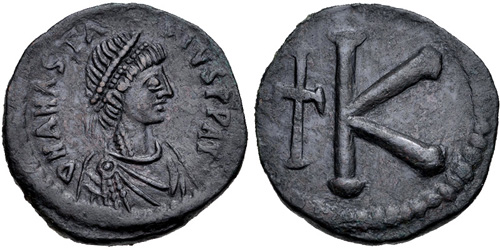
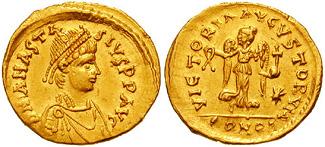
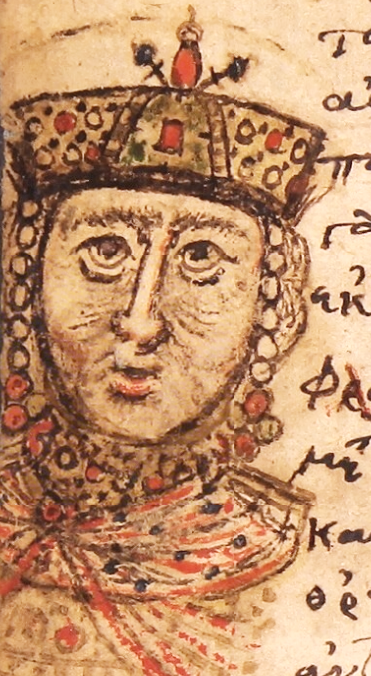

Frequently Asked Questions
Who is Anastasius I Dicorus?
Anastasius I Dicorus was an Illyro-Roman civil servant born around 430 in Dyrrachium who became Eastern Roman emperor in 491. He was handpicked for the throne by Ariadne, the widow of his predecessor Zeno, and ruled for twenty-seven years until his death in 518.
What is Anastasius I Dicorus's role in the series?
He serves as the bureaucratic reformer who completely overhauled the empire's tax system, currency, and government structure, producing a massive budget surplus. He also commissioned the Anastasian Wall and the fortress of Daras as long-lasting military defenses along the frontier.
How does Anastasius I Dicorus's story end?
He died on 9 July 518 after a long and stable reign, leaving behind a financially solvent state ready for his successors' ambitions. The Acacian schism, which persisted during his rule, was finally resolved in 519 under his successor Justin I.
Why is Anastasius I Dicorus important?
His fiscal and administrative overhauls created the economic foundation that later made Justinian I's grand building and military campaigns possible. Many of the institutions he established proved so durable that they survived well beyond his own lifetime.
How did Anastasius I Dicorus come to power?
A lifelong government clerk, he was elevated to the imperial throne at age sixty-one in 491 after Ariadne, widow of Emperor Zeno, selected him as the next ruler. His appointment made him a notable example of a non-military, non-royal figure ascending the Byzantine throne.
More in Emperors Of The Byzantine And Roman World 1-24
Spotted an error? Know more?
This is a living reference — every entry is fact-audited, and reader corrections feed straight into our audit queue. Suggest an edit · See this site's audit record