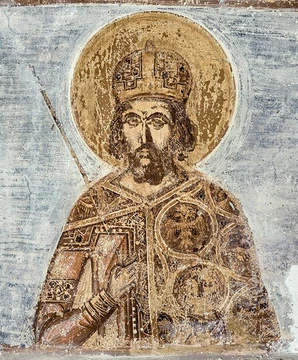
Alexios I Komnenos
Byzantine emperor who sparked the First Crusade.

Alexios I Komnenos, who ruled the Byzantine Empire from 1081 until his death in 1118, seized power during a period of severe crisis. He managed to halt the empire's decline and launched the Komnenian restoration, a recovery in military strength, finances, and territory. His requests to Western Europe for aid against the Seljuk Turks directly led to the First Crusade. Though he was not the first emperor from the Komnenian dynasty, his reign established the family's dominance and made the throne hereditary.
Born around 1057, Alexios was the son of John Komnenos and Anna Dalassene, and a nephew of the former emperor Isaac I Komnenos. He served with distinction under three different emperors before leading a rebellion in 1081 that overthrew Nikephoros III Botaneiates. Immediately after taking the throne, he faced an invasion of the western Balkans by the Normans under Robert Guiscard and his son Bohemond. After initial setbacks, Alexios formed an alliance with Holy Roman Emperor Henry IV and pushed the Normans back, recovering most lost territory by 1085. In 1091, with help from Cuman allies, he won a decisive victory over the Pechenegs at the Battle of Levounion in Thrace.
Later in the 1090s, Alexios turned his attention to Asia Minor, where the Seljuk Turks had taken control of most of the region. Seeking Western support, he made conciliatory moves toward the Papacy, and in 1095 his envoys formally appealed to Pope Urban II at the Council of Piacenza. At the subsequent Council of Clermont, the Pope called for the First Crusade, which began a year later and ended with much of western Anatolia returning to Byzantine rule. Alexios died in 1118 and was succeeded by his son John II Komnenos. His reign and military campaigns were recorded by his daughter Anna Komnene in the *Alexiad*, a political and military history named after him.
Alexios's father had declined the throne when Isaac I abdicated, allowing Constantine X Doukas to become emperor. Alexios and his elder brother Manuel served under Romanos IV Diogenes against the Seljuk Turks. Under Michael VII Doukas and Nikephoros III Botaneiates, Alexios and his other brother Isaac were employed militarily against rebels in Asia Minor, Thrace, and Epirus. In 1074, Alexios subdued a rebellion of western mercenaries led by Roussel de Bailleul. In 1078, Nikephoros III appointed him commander of the field army in the
- born
- c. 1057
- died
- 15 August 1118
- field
- Emperor, military commander
- nationality
- Byzantine (Greek)
- known_for
- Komnenian restoration, initiating the First Crusade
Lore & Background
As emperor, Alexios immediately faced a Norman invasion of the western Balkans under Robert Guiscard and his son Bohemond. Despite initial defeats, he secured an alliance with Holy Roman Emperor Henry IV and drove back the Normans, recovering most Byzantine losses by 1085. In 1091, with Cuman allies, he achieved a decisive victory over the Pechenegs at the Battle of Levounion in Thrace. Later in the 1090s, he turned to Asia Minor, where most territory had fallen to the Seljuk Turks. His envoys made a formal appeal to Pope Urban II at the Council of Piacenza in 1095, leading to the First Crusade, which restored much of western Anatolia to Byzantine rule.
Reader's Guide
Alexios I Komnenos is significant for reversing the decline of the Byzantine Empire and initiating the Komnenian restoration, a period of military, financial, and territorial recovery. His reign marked the full rise of the Komnenos family and the establishment of hereditary succession. His appeal to Pope Urban II at the Council of Piacenza in 1095 directly catalyzed the First Crusade, which had lasting consequences for Byzantine-Western relations and the geopolitics of the Near East. Although not the first Komnenian emperor, Alexios consolidated dynastic power and was succeeded by his son John II Komnenos. His life and campaigns were recorded by his daughter Anna Komnene in the Alexiad, a major historical source. His legacy includes both the stabilization of the empire and the unintended long-term effects of crusader involvement in Byzantine affairs.
Did You Know?
- Alexios was adopted by Empress Maria of Alania to secure the succession of her son Constantine Doukas.
- His mother Anna Dalassene played a prominent role in the coup of 1081, negotiating with Emperor Nikephoros III from Hagia Sophia.
- Alexios defeated the Pechenegs at the Battle of Levounion in 1091 with the help of Cuman allies.
- His daughter Anna Komnene wrote the Alexiad, a political and military history of his reign.
The Boy Who Fled the Capital
Andronikos Komnenos entered the world around 1118 or 1120 as the son of Isaac Komnenos, a sebastokrator, and his wife Irene. He had an older brother named John and two elder sisters, one of them called Anna. As the nephew of the sitting emperor John II, Andronikos was raised in the shadow of imperial power and spent his formative years alongside his cousin Manuel, who would one day succeed on the throne. That privileged childhood shattered in 1130, when his father was implicated in a plot against John II during the emperor's absence on a campaign against the Sultanate of Rum. The scheme was exposed, and the entire family was forced into a six-year flight that carried them to the court of the Danishmendid emir Gümüshtigin Ghazi at Melitene, then through Trebizond, Armenian Cilicia, and the Sultanate of Rum itself, before Isaac finally won back his brother-in-law's forgiveness. The historian Anthony Kaldellis later described Andronikos as one of the most vivid and multifaceted figures of his era — tall, strikingly handsome, courageous in battle, yet a weak strategist, whose charm, wit, and elegance left a deep impression on everyone who crossed his path.
From Cousins to Enemies: The Rivalry with Manuel
When Manuel I ascended the throne in 1143, his bond with Andronikos was warm and natural. The two men were close in age and had grown up together, and Manuel clearly enjoyed his cousin's company, lending him his prized horse during joint military expeditions. Andronikos, for his part, bristled at any official who spoke ill of Manuel's rule. Yet Manuel never truly wove Andronikos into the inner web of imperial power, and the younger man's careless handling of duties left a growing gap. The rupture came in 1148, when Manuel showered his other nephew, John Doukas Komnenos, with the prestigious titles of protovestiarios and protosebastos — a blow Andronikos never fully recovered from. From that point he drifted into open intrigue. His 1151–1152 campaign against Thoros II of Armenian Cilicia ended in humiliating defeat, and in the winter of 1152–1153, while the court lingered at Pelagonia, he was caught in an incestuous liaison with Manuel's own niece Eudokia Komnene, escaping would-be assassins by slashing a hole in the tent wall with his sword. Conspiracies with the kings of Jerusalem and Hungary followed, and in 1155 Manuel locked him in the imperial palace. Andronikos broke free in 1159.
The Tyrant's Two Years
Manuel I's death in 1180 threw Constantinople into chaos, as the young Alexios II was placed on the throne and competing factions jostled for control. The elderly Andronikos, long a figure of scandal and rivalry, suddenly found himself at the center of the power vacuum. In 1182 he seized the capital, presenting himself as the young emperor's guardian, but his true intentions revealed themselves with terrifying speed. He moved ruthlessly against every rival, most notably eliminating Maria of Antioch, the boy's mother and regent. By September 1183 he had himself crowned co-emperor and ordered the murder of Alexios II, claiming the throne outright. His rule was defined by a fierce, almost personal war against the Byzantine aristocracy, whose influence he sought to crush through brutal measures. These policies, while deeply unpopular among the elite, did bring tangible benefits to ordinary citizens. Yet the empire grew more unstable with each passing month, punctuated by revolts. The final blow came in 1185 when William II of Sicily captured Thessaloniki. The people of Constantinople, once perhaps tolerant of his harshness, turned on him. Andronikos was seized and brutally murdered on 12 September 1185.
The Last Komnenos and the Long Shadow
Andronikos I stands as the final emperor of the Komnenos dynasty, a line that had ruled Byzantium from 1081 until his death in 1185. His memory, however, was almost entirely poisoned by those who came after. Later Byzantine chroniclers painted him as a monstrous tyrant, and one historian gave him the epithet "Misophaes" — literally "hater of sunlight" — a bitter reference to the sheer number of political enemies he had blinded. His anti-aristocratic program, while it had eased the burden on common citizens, effectively dismantled the carefully balanced Komnenian system of governance that his predecessors had built. The Angelos dynasty, which took power in 1185, reversed his reforms, and that reversal contributed to the gradual erosion of imperial central authority that would ultimately leave the empire vulnerable. When the Fourth Crusade toppled Constantinople in 1204, the Komnenos name did not vanish entirely. Through his eldest son Manuel, Andronikos' descendants established the Empire of Trebizond, where the Komnenoi continued to hold the throne for another three centuries, until 1461.
Gallery
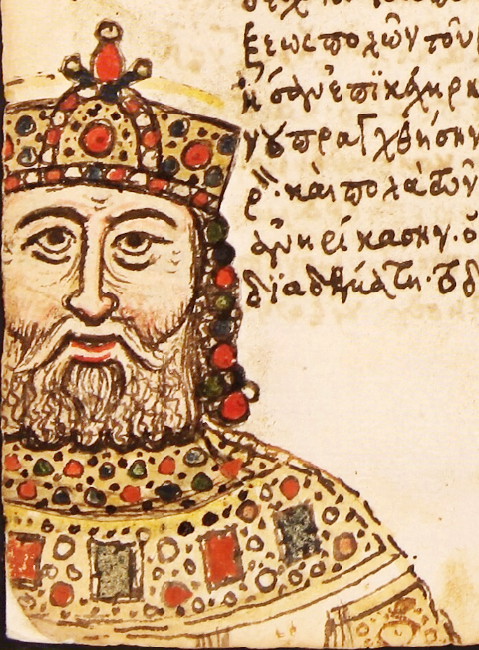
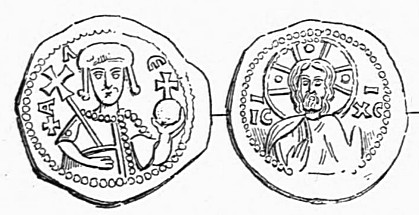
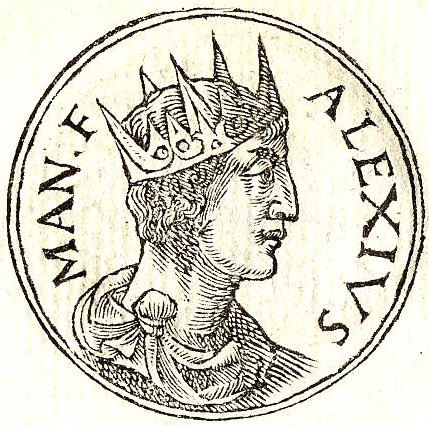
Frequently Asked Questions
Who is Alexios I Komnenos?
Alexios I Komnenos was a Byzantine emperor who held the throne from 1081 until his death on 15 August 1118. Born around 1057 as the son of John Komnenos and Anna Dalassene, he is best remembered for stabilizing a crumbling empire and setting the First Crusade in motion.
How did Alexios I Komnenos come to power?
He seized the imperial throne in 1081 amid a severe political and military crisis that had left the Byzantine state on the verge of collapse. Although he was not the first member of the Komnenian family to wear the crown, his accession cemented the dynasty's long-term hold on the succession.
What is the Komnenian restoration?
It is the term used for the sweeping recovery of Byzantine military strength, financial health, and territorial control that Alexios I drove forward after taking the throne. His reforms effectively reversed much of the empire's earlier decline and laid the groundwork for the Komnenian dynasty's dominance.
How did Alexios I Komnenos connect to the First Crusade?
Confronted by persistent Seljuk Turk incursions, he dispatched urgent appeals to Western Europe requesting military aid. Those pleas ultimately inspired the papal call to arms that launched the First Crusade in 1096, making him the direct catalyst for that campaign.
Why is Alexios I Komnenos considered important in Byzantine history?
He is widely regarded as the emperor who rescued the Byzantine state from near-total disintegration and made the Komnenian family the ruling house. His diplomatic overtures to Latin Christendom also opened a prolonged chapter of East-West interaction that shaped both Byzantine and European history for centuries.
More in Emperors Of The Byzantine And Roman World 1-24
Spotted an error? Know more?
This is a living reference — every entry is fact-audited, and reader corrections feed straight into our audit queue. Suggest an edit · See this site's audit record