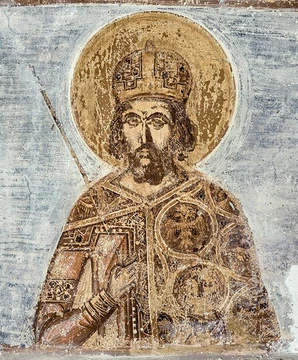
Constantine V
Byzantine emperor who strengthened borders and enforced iconoclast policies.

Kostisl · CC BY-SA 4.0
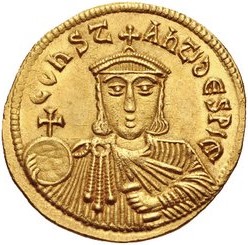
Constantine V (July 718 – 14 September 775) ruled the Byzantine Empire from 741 until his death. A capable commander, he strengthened the empire’s defenses against outside threats. Exploiting a civil war among the Muslims, he launched limited attacks along the Arab frontier. Once that border was stable, he focused on the Balkans, leading repeated campaigns against the Bulgars. By moving Christian populations from the Arab frontier into Thrace, he solidified Byzantine control over its Balkan lands. He also introduced key military and administrative reforms. His reign was marked by intense religious conflict. A staunch supporter of iconoclasm, he also opposed monasticism. This earned him fierce hatred from iconodule writers, who gave him insulting nicknames like “Dung-Named,” “Anointed with Urine,” and “the Equestrian.”
- born
- July 718
- died
- 14 September 775
- field
- Byzantine emperor
- nationality
- Byzantine
- known_for
- Military consolidation of Byzantine security; fervent support of iconoclasm; opposition to monasticism; military and administrative reforms
Lore & Background
Constantine was born in Constantinople, the son and successor of Emperor Leo III and his wife Maria. In the Easter of 720, at two years of age, he was associated with his father on the throne, and crowned co-emperor by Patriarch Germanus I. He married Tzitzak, daughter of the Khazar khagan Bihar, an important Byzantine ally; his new bride was baptized Irene in 732. On his father's death, Constantine succeeded as sole emperor on 18 June 741. Historical accounts of Constantine make reference to a chronic medical condition, possibly epilepsy or leprosy; early in his reign this may have been employed by those rebelling against him to question his fitness to be emperor.
Reader's Guide
Constantine V's reign was pivotal in consolidating Byzantine security through military campaigns against Arabs and Bulgars, and through administrative reforms. His fervent support of iconoclasm, however, defined his legacy and led to intense religious strife. The Council of Hieria in 754 endorsed his iconoclast policies, but later Byzantine tradition definitively classed iconoclasm as heretical. Iconodule writers vilified Constantine with derogatory nicknames, and his persecution of monks and iconodules drove many to flee to southern Italy and Sicily. His military and administrative innovations strengthened the empire, but his religious policies and the associated violence created a deeply polarized historical record. The accounts of his reign, written largely by vehemently anti-iconoclast sources, are of questionable reliability. Constantine's legacy is thus a complex one: a capable military leader and reformer whose iconoclast zeal earned him lasting condemnation from the dominant iconodule tradition.
Did You Know?
- Constantine was crowned co-emperor at age two in Easter 720.
- His bride Tzitzak, daughter of the Khazar khagan, was baptized Irene in 732.
- He convened the Council of Hieria in February 754, which declared religious images anathema.
- Iconodule writers gave him the nickname Kopronymos ('dung-named') based on a rumour about his baptism.
Military Leadership & Frontier Consolidation
Constantine V proved himself a capable military commander whose campaigns reshaped the empire's strategic posture across two fronts. Exploiting a period of civil discord within the Muslim world, he launched limited but effective offensives along the Arab frontier, establishing a degree of eastern security that had eluded earlier rulers. With that border stabilized, he redirected his energy westward, launching repeated operations against the Bulgars in the Balkans. Beyond direct combat, he pursued a deliberate settlement policy, relocating Christian communities from the Arab frontier into Thrace, thereby strengthening Byzantine demographic and territorial claims in the region. His reign also produced important military and administrative innovations and reforms that reinforced the empire's institutional capacity. The combined effect of these campaigns and settlement programs was a markedly more secure hold on the Balkan territories, a legacy of strategic consolidation that distinguished his thirty-four-year rule as one of the more militarily productive stretches of Byzantine history.
The Artabasdos Rebellion
Constantine's accession in June 741 was almost immediately challenged by his brother-in-law Artabasdos, the strategos of the Opsikion theme who also commanded the Armeniac theme. The revolt erupted when the two men's forces were combined for a planned campaign against the Umayyad Caliphate; a trusted member of Constantine's retinue named Beser was killed in the ambush. Constantine fled to Amorion, where local soldiers who had served under his father Leo III sheltered him. Artabasdos pressed toward Constantinople, gaining the backing of the regent Theophanes Monutes and Patriarch Anastasius, who crowned him emperor. The conflict settled into a tense standoff before Constantine struck first, defeating Artabasdos at Sardis in May 743. Three months later he crushed Artabasdos' son Niketas and the Armeniac troops at Modrina, then marched on the capital. After a siege and further fighting, Constantine re-entered Constantinople in early November. The retribution was severe: Patriarch Anastasius was paraded on an ass through the hippodrome to public jeers, while Artabasdos and his sons were captured at the fortress of Pouzanes, publicly blinded, and confined to the monastery of Chora.
Iconoclasm & Theological Engagement
Religious controversy dominated much of Constantine's reign, and his most defining intellectual commitment was his fervent defense of iconoclasm, the movement rejecting the veneration of religious images and calling for their destruction. Constantine personally engaged in the theological debate, composing thirteen treatises, two of which survive only in fragmentary form, and dispatching representatives throughout the empire to argue his position at organized assemblies. His central argument drew on the Church Father John of Damascus's term 'uncircumscribable' for God: Constantine exploited the linguistic overlap between 'uncircumscribed' and 'incapable of being depicted' to argue that what is uncircumscribable cannot legitimately be rendered in an image. Since Christ is God, he reasoned, Christ too cannot be depicted. In February 754 he convened a council at Hieria, staffed entirely by iconoclast bishops, which declared images anathema and endorsed his policy. His opponents, the iconodules, fought back with equal passion, and the bitter dispute left a deep scar on Byzantine religious life that outlasted his reign.
Posthumous Vilification & the War of Memory
The memory of Constantine V was shaped less by his military successes than by the ferocity of his religious opponents. Iconodule writers, who dominated later Byzantine historiography, attached to him a suite of grotesque epithets designed to delegitimize his very birth. 'Dung-Named' (Kopronymos) spread the rumor that as an infant he had defiled his own baptism by defecating in the font or on the imperial purple cloth swaddling him. 'Anointed with Urine' (Ouralýphios) and 'the Equestrian' (Kaballinos, referencing horse excrement) extended the same theme of bodily contamination. These names functioned as theological weapons, meant to cast doubt on the sacred legitimacy of an emperor who had attacked the veneration of sacred images. Contemporary commentators who opposed him vilified him in his own lifetime, and the majority of later Byzantine writers inherited and amplified that hostility. The result is a figure whose long reign produced genuine strategic and administrative achievements, yet whose popular memory was almost entirely consumed by the obscenity of his opponents' pen.
Gallery
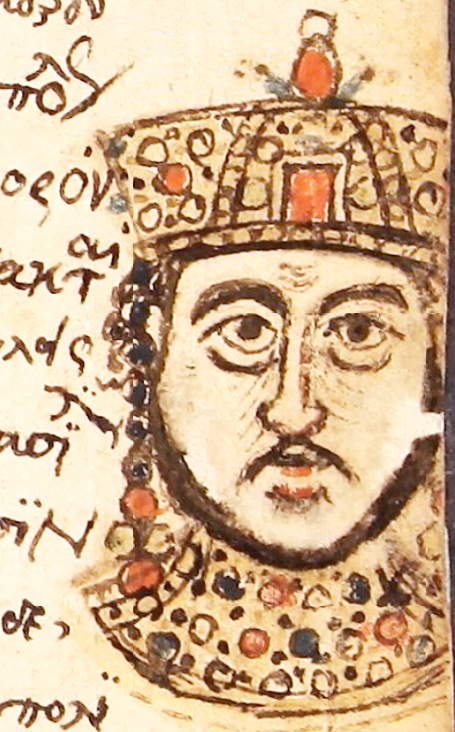
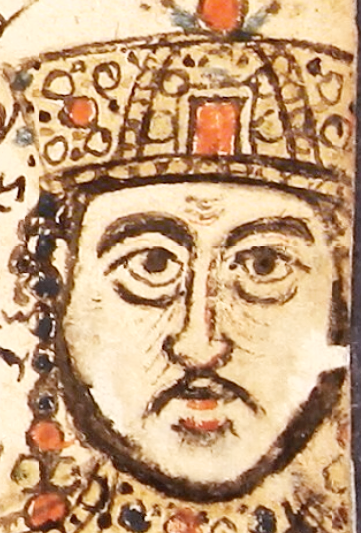
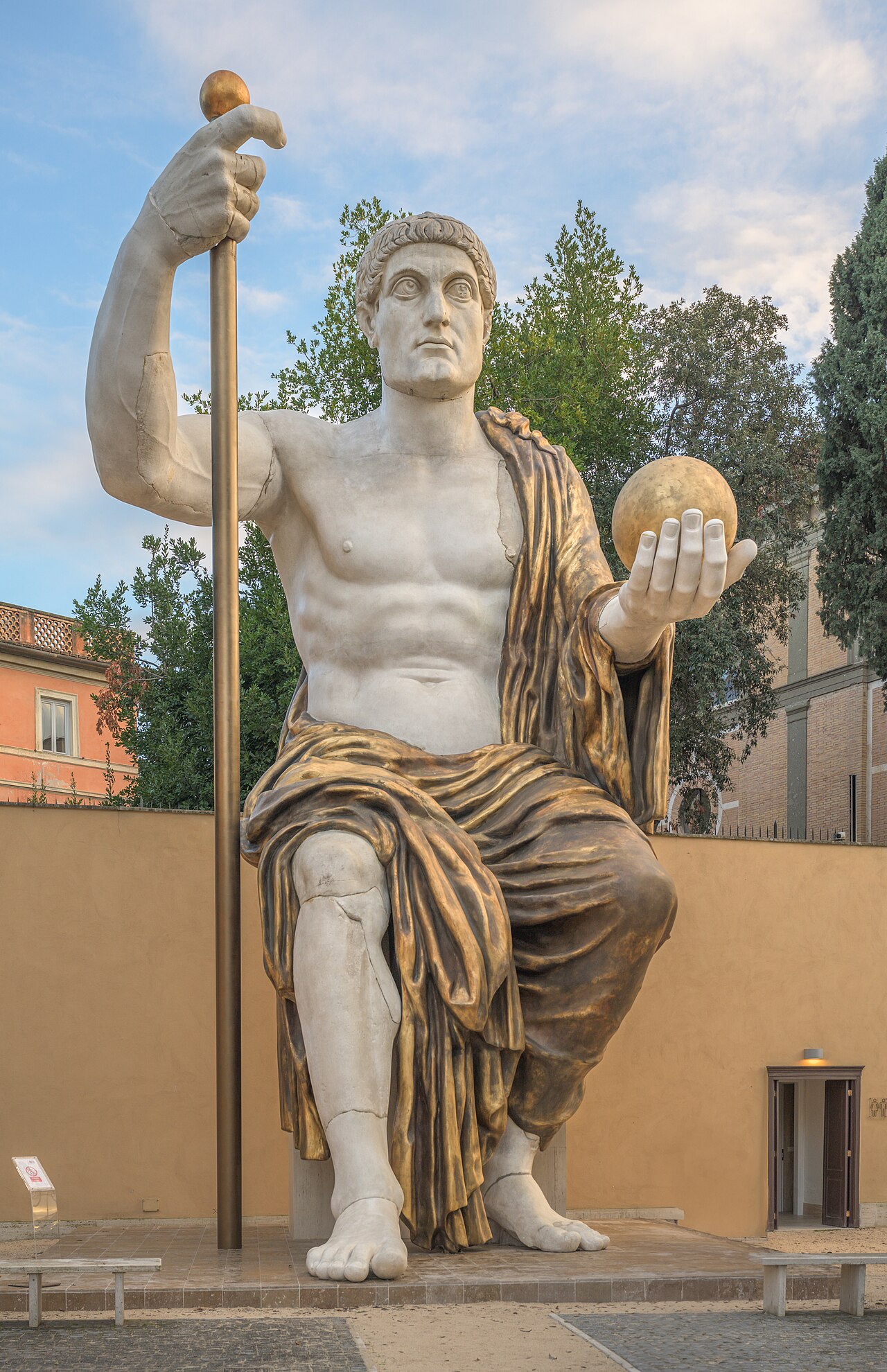
Frequently Asked Questions
Who is Constantine V?
Constantine V was a Byzantine emperor who held the throne from 741 until his death in 775. He was the son of Leo III and is remembered as a hands-on, militarily active ruler of the 8th-century Byzantine state.
What is Constantine V most known for?
He is best remembered for his aggressive enforcement of iconoclasm and his direct opposition to monastic institutions. He also earned recognition for consolidating Byzantine border security and introducing military and administrative reforms.
How did Constantine V handle the Arab and Bulgar threats?
He exploited internal Muslim conflict to press limited offensives along the eastern frontier, then shifted his focus to repeated campaigns against the Bulgars in the Balkans. He reinforced Byzantine control over Thrace by resettling Christian communities from the Arab borderlands into that region.
What was Constantine V's stance on icons and the monasteries?
He was a fervent advocate of iconoclasm, actively suppressing the veneration of religious images across the empire. His hostility extended to monasticism, which he saw as a political and theological challenge to imperial authority.
How did Constantine V's reign end?
Constantine V died on 14 September 775, bringing his thirty-four-year rule to a close. He was succeeded by his son, who would go on to be known as Constantine VI.
More in Emperors Of The Byzantine And Roman World 1-24
Spotted an error? Know more?
This is a living reference — every entry is fact-audited, and reader corrections feed straight into our audit queue. Suggest an edit · See this site's audit record