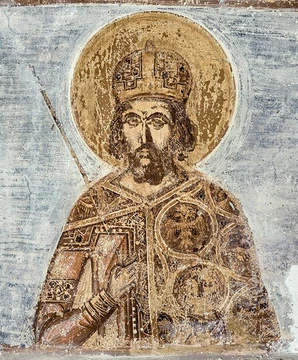
Cato the Younger
Conservative senator who opposed Caesar and died for the Republic.

Marcus Porcius Cato Uticensis (95 BC – April 46 BC), known as Cato the Younger, was a conservative Roman senator and a staunch advocate for the preservation of the Republic's traditional values. A follower of Stoicism and a noted orator, he used his reputation for honesty and respect for tradition to mobilize political support against powerful generals such as Julius Caesar and Pompey, and his uncompromising stance contributed to the outbreak of civil war.
- born
- 95 BC
- died
- April 46 BC
- field
- Politics, Stoicism
- nationality
- Roman
- known_for
- Defending the Roman Republic against Julius Caesar; martyr for the Republic
Lore & Background
Cato was born in 95 BC, the son of his homonymous father and Livia, and was descended from Cato the Elder. Orphaned before age four, he and his sister Porcia were raised by their maternal uncle Marcus Livius Drusus, and later by Mamercus Aemilius Lepidus Livianus. Stories of his childhood are broadly unreliable, but he was inducted into the quindecimviri sacris faciundis around age 16, a prestigious priestly board. He adopted an austere lifestyle, walking barefoot and wearing only a toga, modeled on statues of Rome's legendary founders, to present himself as the ideal of Roman virtue.
Cato's political career included serving as urban quaestor in 63 BC, where he was praised for his honesty, and as plebeian tribune in 62 BC, where he passed laws to expand the grain dole and force generals to give up commands before elections. He opposed Caesar's legislative program during Caesar's first consulship in 59 BC, and later served as praetor in 54 BC. During the civil war, he joined Pompey and tried to minimize citizen deaths, but after defeat in Africa, he chose suicide rather than accept Caesar's pardon, becoming a martyr for the Republic.
Reader's Guide
Cato the Younger's significance lies in his role as a symbol of the Roman Republic's traditional values and his uncompromising opposition to the rise of autocratic power. His political influence was rooted in his moralist principles and his embodiment of Roman traditions, which appealed to both senators and conservative voters. However, his tactics of confrontation and brinkmanship with Caesar, though he never advocated for actual civil war, greatly contributed to the start of the civil war in January 49 BC. After his defeat and suicide, he turned himself into a martyr for the Republic, a legacy that endured in Roman memory. Contemporaries and modern historians have criticized him for being too uncompromising in obstructing Caesar and other powerful generals, noting that his actions led to the creation of the First Triumvirate and the outbreak of civil war. His epithet 'the Younger' distinguishes him from his great-grandfather, Cato the Elder, who was similarly viewed as embodying tradition and propriety.
Did You Know?
- Cato was inducted into the quindecimviri sacris faciundis, the board of priests in charge of the Sibylline Oracles, around age 16.
- He adopted an archaic style of dress, wearing only a toga without a tunic, modeled on statues of Rome's legendary founders.
- During his urban quaestorship in 63 BC, he was praised for his honesty and incorruptibility in running Rome's finances.
- After his defeat in the civil war, he chose to take his own life rather than accept what he saw as Caesar's tyrannical pardon.
More in Emperors Of The Byzantine And Roman World 1-24
Spotted an error? Know more?
This is a living reference — every entry is fact-audited, and reader corrections feed straight into our audit queue. Suggest an edit · See this site's audit record