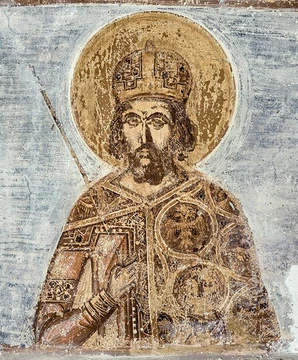
Catiline
Roman politician who led a failed coup in 63 BC.

Lucius Sergius Catilina, commonly called Catiline, lived from around 108 BC to January 62 BC. He was a Roman politician and soldier, most famous for starting the Catilinarian conspiracy, a plot to take over the Roman state by force in 63 BC that ultimately failed. He came from an old patrician family and fought on the side of Sulla during the civil war, using the proscriptions of Sulla’s enemies to build his personal fortune. In the early 60s BC, he held the office of praetor and then governed the province of Africa from 67 to 66 BC. When he returned to Rome, he tried to run for consul but was rejected. He then faced legal troubles over corruption charges in Africa and his actions during Sulla’s proscriptions. With help from influential allies, he was acquitted of all charges and ran for consul again in 64 and 63 BC, but lost both times.
After these defeats, Catiline organized a plot to seize the consulship by violence. He gathered support from poor rural plebeians, veterans of Sulla, and other senators whose political careers had stalled. In October 63 BC, Crassus told Cicero, one of the consuls, about the planned coup, which included armed uprisings in Etruria. Evidence of Catiline’s involvement only emerged in November. Once discovered, he left Rome to join his rebel forces. In early January 62 BC, near Pistoria (modern Pistoia in Tuscany), he led his army against republican troops at the Battle of Pistoria. Catiline was killed, and his army was wiped out.
After his death, Catiline’s name became a symbol of doomed, treasonous rebellion. The historian Sallust, in his work *Bellum Catilinae*, portrayed Catiline as a sign of the Roman Republic’s moral decay, describing him as both a perpetrator and a victim, with a “ravaged mind” (*vastus animus*).
**Early life**
**Family background** Catiline belonged to the ancient patrician *gens Sergia*, which claimed descent from Sergestus, a Trojan companion of Aeneas. Sallust called him one of the *nobiles*, meaning his family had produced consuls, but the details are unclear. No member of the *gens Sergia* had been consul since Gnaeus Sergius Fidenas Coxo’s second consulship in 429 BC. A few other Sergii had served as consular tribunes, but the last was in 380 BC. Catiline’s exact birth year is unknown, but based on the offices he held, he was born no later than 108 BC—or 106 BC if patricians could hold magistrac
- born
- c. 108 BC
- died
- January 62 BC
- field
- Politics, military
- nationality
- Roman
- known_for
- Catilinarian conspiracy
Lore & Background
Catiline was a member of the ancient patrician gens Sergia, claiming descent from a Trojan companion of Aeneas. His parents were Lucius Sergius Silus and Belliena; his father was poor by aristocratic standards. During the Social War, he served under Gnaeus Pompeius Strabo alongside Cicero, as recorded on the Asculum Inscription. He married Gratidia, a niece of Gaius Marius, and later joined Sulla's side in 82 BC, profiting from the proscriptions by purchasing estates at low prices. Ancient sources, including Cicero, accused him of killing his brother and brothers-in-law, though modern historians doubt some details, attributing them to political slander.
Reader's Guide
Catiline's significance lies in his role as the instigator of the Catilinarian conspiracy, a pivotal event in the late Roman Republic that exposed political instability and class tensions. His failed rebellion, revealed by Crassus to Cicero, led to his death at the Battle of Pistoria in early January 62 BC. After his death, his name became a byword for doomed and treasonous rebellion. The historian Sallust, in his monograph Bellum Catilinae, portrayed Catiline as a symbol of the Republic's moral decline, describing him as having 'a ravaged mind' (vastus animus), a victim as much as a perpetrator. The conspiracy highlighted the struggles between the senatorial elite and disenfranchised groups, including poor rural plebs and Sullan veterans, and cemented Cicero's reputation as a defender of the state.
Did You Know?
- Catiline's candidacy for the consulship was rejected in 66 BC, possibly due to an imminent extortion trial or because he was not a candidate in the first election.
- He was acquitted of corruption charges in 65 BC after a trial where senators voted for conviction but equites and tribuni aerarii voted for acquittal.
- Catiline may have been prosecuted in 73 BC for adultery with a Vestal Virgin named Fabia, but was acquitted with help from his friend Catulus.
- The so-called 'First Catilinarian conspiracy' of 65 BC is considered fictitious by modern scholars.
More in Emperors Of The Byzantine And Roman World 1-24
Spotted an error? Know more?
This is a living reference — every entry is fact-audited, and reader corrections feed straight into our audit queue. Suggest an edit · See this site's audit record